


The Software Trap
When something in the firm feels broken, the instinct is to buy a solution, whether it’s a new workflow platform, a new client portal, or the latest AI tool. The demo was great, so you implement it. And even though your team’s trained and everyone’s on board, six months later the same frustrations are back — now they’re just running inside a different interface.
Trying to use software to solve a process or structure challenge is like putting a bandaid on a bullet wound. The software itself is probably great at making a well-designed process faster. But software cannot design the process for you, define who owns what on your team, or decide which clients and services deserve your capacity. When those foundations are missing, every new tool just adds cost, complexity, and one more thing for your team to learn. Not to mention the toll on your team, as you're asking them to absorb change after change while the underlying workload never improves.
Why Smart Owners Get Stuck
In our advisory conversations, we see two patterns over and over.
The first is the owner who has never taken an honest inventory. They have a general sense that things are harder than they should be, but they couldn’t tell you specifically where the firm is weak. Everything feels urgent, so nothing gets prioritized.
The second is the owner who knows exactly where the firm is weak and is overwhelmed by where to start — so they start everywhere. Too many initiatives, too fast, with not enough clarity or consistency to see real progress on any of them. The urgent keeps beating the important, and a year goes by without the firm meaningfully changing.
Both patterns have the same two missing pieces: visibility and sequence.
Start With an Honest Look
You can’t fix what you can’t see clearly. Before you change anything, get specific about where your firm sits across the areas that drive value: your clients and pricing, your team and operations, your technology and security, and how leadership makes decisions.
Do this in writing, not in your head. We put together a free Firm Health Checklist with 15 warning signs we see in firms that are running on effort instead of systems. Things like fees that haven’t been reviewed in over a year, roles that live in people’s heads instead of on paper, and team meetings that happen but don’t move anything forward. You’ll walk away with your specific gaps named clearly so you can act on them.
Then Work in the Right Order
Visibility tells you what’s broken; sequence tells you what to fix first. This is where most improvement efforts fall apart.
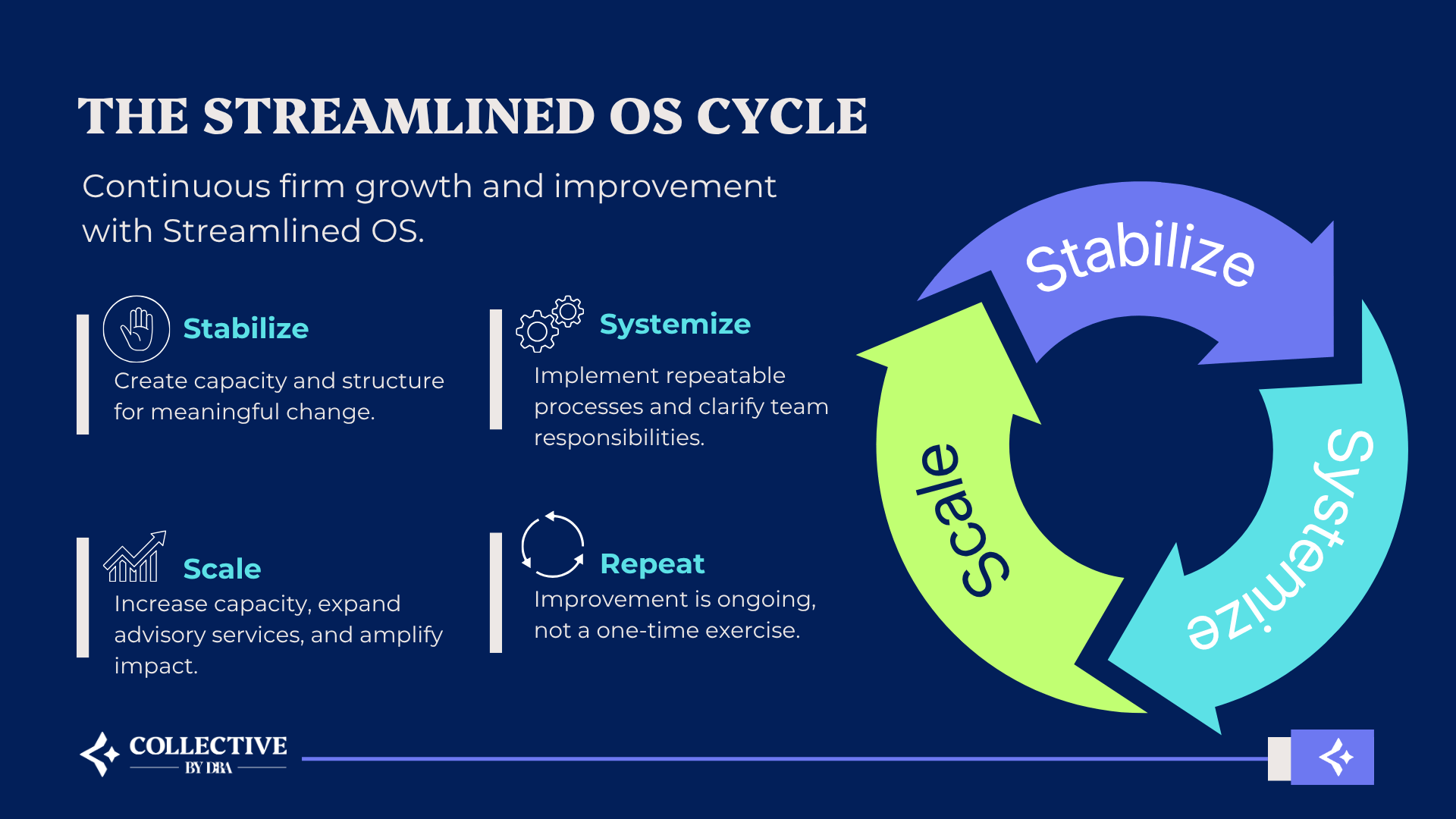
Every accounting firm moves through three phases of growth: Stabilize, Systemize, Scale. First you stabilize the foundation, including pricing, client mix, and clear roles. Then you systemize how the work gets done so it doesn’t depend on any one person. Only then can you scale without breaking what you built. Firms that try to scale before they’ve stabilized end up hitting the same wall again and again, no matter how hard everyone works.
Knowing which phase your firm is in changes everything about what you should prioritize. If you want help placing your firm, our free guide, “Why Your Accounting Firm Keeps Hitting the Same Wall,” breaks down each phase in plain language, the most common gaps firms face in each one, and what to work on first.
What This Looks Like in Practice
Once you have visibility and know the sequence, improvement becomes a rhythm instead of a reaction. Here is the rhythm we follow at our firm and recommend to every firm we advise.
Pause at least twice a year, outside of deadline seasons, and score your firm honestly. If you have partners or a leadership team, have each person score independently before you compare notes. The disagreements that surface are some of the most valuable conversations you’ll have all year because they’re the ones that otherwise stay buried. From there, pick a small handful of priorities that match your current phase — three or four of them, not ten. Then give those a season to work, and before you add anything new, check whether they're actually improving things. If a priority isn't producing results, that's a signal to adjust your approach, not to add five more initiatives on top of it.
Don’t wait until you have it all figured out to begin. You won’t, and you don’t need to. Take the first step, learn from it, and adjust as you go.
This rhythm is exactly what we built Streamlined OS to make easy, with a structured assessment, a shared view for leadership teams, and resources matched to each gap. But the principle holds whether you ever use the tool or not: visibility first, sequence second, and a few priorities at a time.
Watch the full episode of Who's Really the Boss? for the entire conversation.